
Fractional CHRO Services
Align people leadership with the institution’s strategy and operating needs.
Chief Human Resources Officer
Cicrim’s fractional Chief Human Resources Officer service gives your institution defined executive ownership for workforce planning, leadership capability, talent operations and organizational change. The engagement starts with an agreed mandate, decision authority and operating cadence.
- Workforce planning
- Leadership capability
- Talent operations
- Change readiness
An explicit mandate for chief human resources officer leadership
Align people leadership with the institution’s strategy and operating needs. Responsibilities are tailored to the institution’s needs, existing leadership and retained decision authority.
Workforce planning
Connect role and capacity needs to business priorities, transformation plans and available resources.
Leadership capability
Support succession discussions, management routines, coaching and accountable role expectations.
Talent operations
Clarify hiring, onboarding, development and performance processes with appropriate HR and legal review.
Change readiness
Plan communications, employee support and adoption responsibilities as the organization evolves.
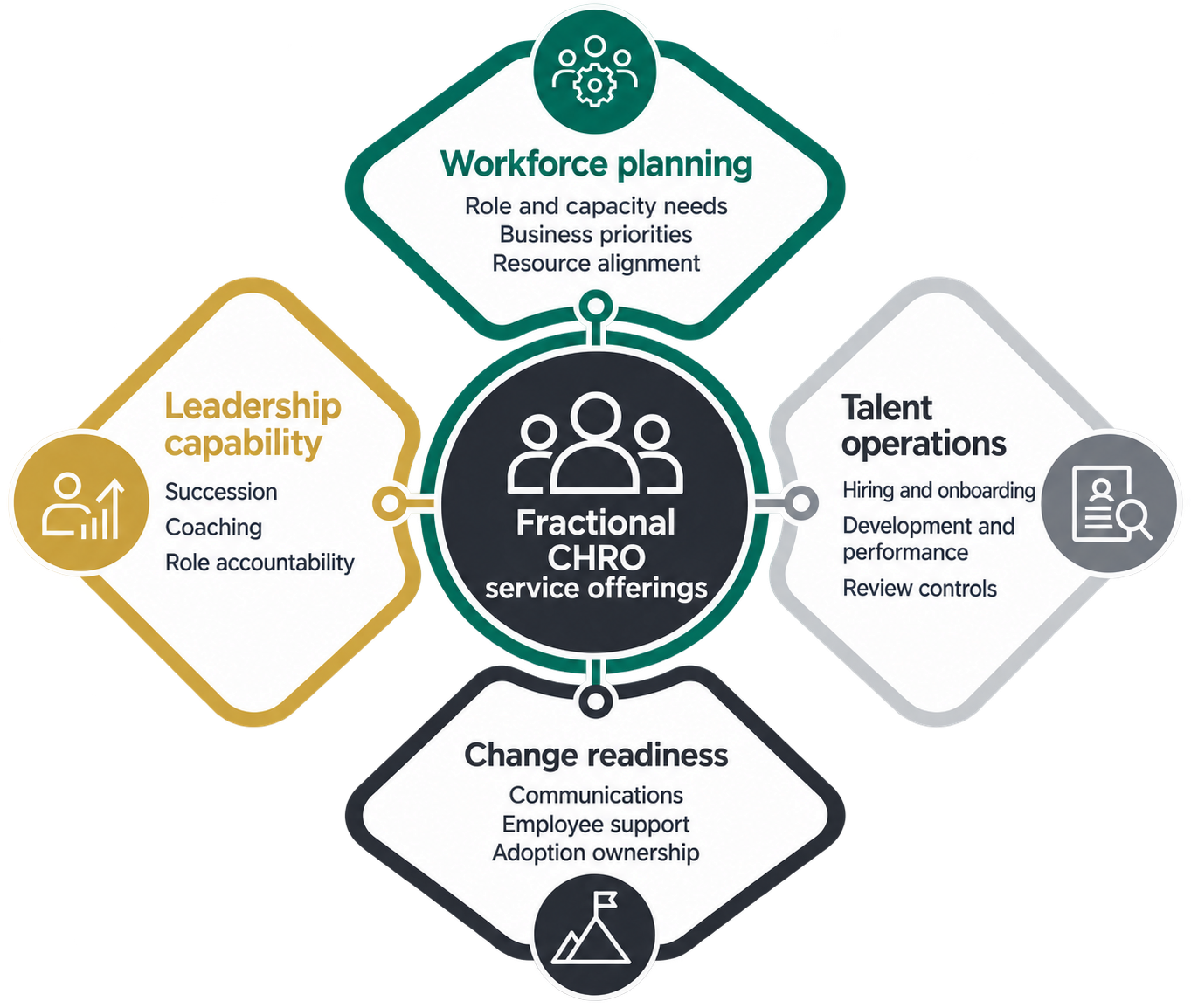
The CHRO mandate needs governance that connects workforce capacity, role clarity, succession, talent operations, employee support, and organizational change.
People decisions with accountable leaders
Cicrim establishes ownership and escalation for workforce plans, critical roles, succession, hiring priorities, performance routines, and change decisions.
- Workforce and critical-role planning forum
- Succession, hiring, and development decisions
- Policy, employee-risk, and change escalation
Workforce evidence for action
Management receives practical measures that connect capacity, leadership readiness, talent operations, employee experience, and adoption to institutional priorities.
- Capacity, vacancy, and critical-role visibility
- Leadership, development, and succession progress
- Change readiness, adoption, and employee-support measures
The CHRO engagement leaves stronger people leaders, clear workforce ownership, and practical routines for sustaining talent and organizational change.
Build people leadership
Coach executives, managers, and HR owners to make workforce decisions, clarify roles, support employees, and lead change with consistent accountability.
Transfer the people model
Hand off the workforce plan, role and succession priorities, talent-operation routines, change measures, open decisions, and leadership calendar.
The CHRO mandate, availability, people-decision authority, and transition measures are defined for the engagement. Institutional management retains accountability for employment decisions and obligations.
Workforce decisions that need leadership
Set workforce priorities
Clarify capacity, role, succession, talent, and organizational decisions that require CHRO leadership.
Govern people operations
Align executives, managers, finance, risk, and people teams around workforce evidence, accountability, and change.
Transfer people leadership
Strengthen the internal team and leave clear role ownership, talent routines, and change capability in place.