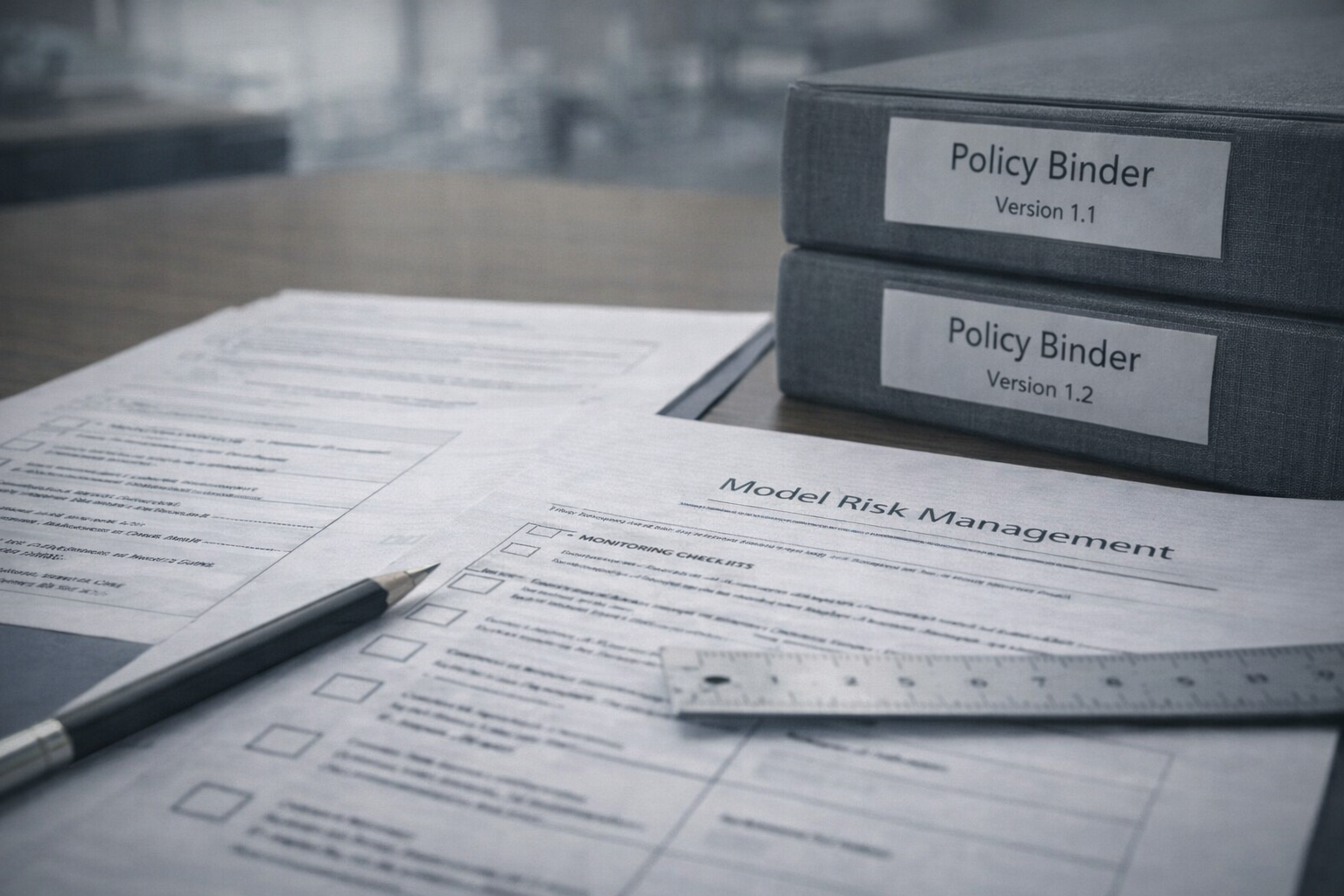
Evidence capture spanning models, workflows, controls and human-in-the-loop actions
Create a durable evidence chain that shows what the system did, what a person decided and how the bank’s controls operated at every material step.
Sept. 7, 2026 · Cicrim
AI oversight breaks down when model records, workflow logs, control testing and human approvals live in separate systems. Cicrim’s evidence-capture pattern links those records around the business decision so reviewers can reconstruct what happened without assembling a manual file after the fact.
Capture the decision, not just the model output
A complete record includes the model version and result, the policy or control applied, any exception raised, the person who reviewed it and the final disposition. That context makes technical telemetry useful to compliance, model risk, operations and audit.
- Model evidence: Preserve versions, input references, outputs, explanations and monitoring status.
- Workflow evidence: Record queues, assignments, timestamps, exceptions and service-level performance.
- Control evidence: Link policy requirements to automated checks, tests, approvals and remediation.
- Human evidence: Retain overrides, supporting notes, approvals and the authority used to make each decision.
Make evidence reproducible
Reviewers should be able to trace a material event from the final outcome back through the workflow, control logic and model state. Consistent identifiers, retention rules and ownership standards make that reconstruction routine instead of exceptional.
What a defensible evidence chain includes
- A shared evidence taxonomy and source-system map.
- Decision-level identifiers across models, workflows and control records.
- Retention, access and data-quality controls aligned to record criticality.
- Evidence completeness checks and exception reporting.
- Examiner-ready packages that can be reproduced from source records.